⚡ Direct Answer / Clinical Summary
Yes, TMS (Transcranial Magnetic Stimulation) therapy is exceptionally safe, non-invasive, and FDA-cleared for treating major depressive disorder, OCD, and anxious depression.
Because TMS uses targeted magnetic fields to stimulate specific brain regions without circulating through the bloodstream, it causes zero systemic side effects—meaning no weight gain, no sedation, no sexual dysfunction, and no memory impairment. The most common side effect is temporary scalp discomfort during the first few sessions.
What is TMS Therapy?
Before exploring the extensive clinical safety data, it is helpful to understand what Transcranial Magnetic Stimulation is and how it functions. Transcranial Magnetic Stimulation (TMS) is an advanced, non-invasive neuromodulation therapy cleared by the U.S. Food and Drug Administration (FDA) to treat Major Depressive Disorder (MDD), Obsessive-Compulsive Disorder (OCD), and anxious depression—particularly for patients who have not found adequate relief from traditional antidepressant medications.
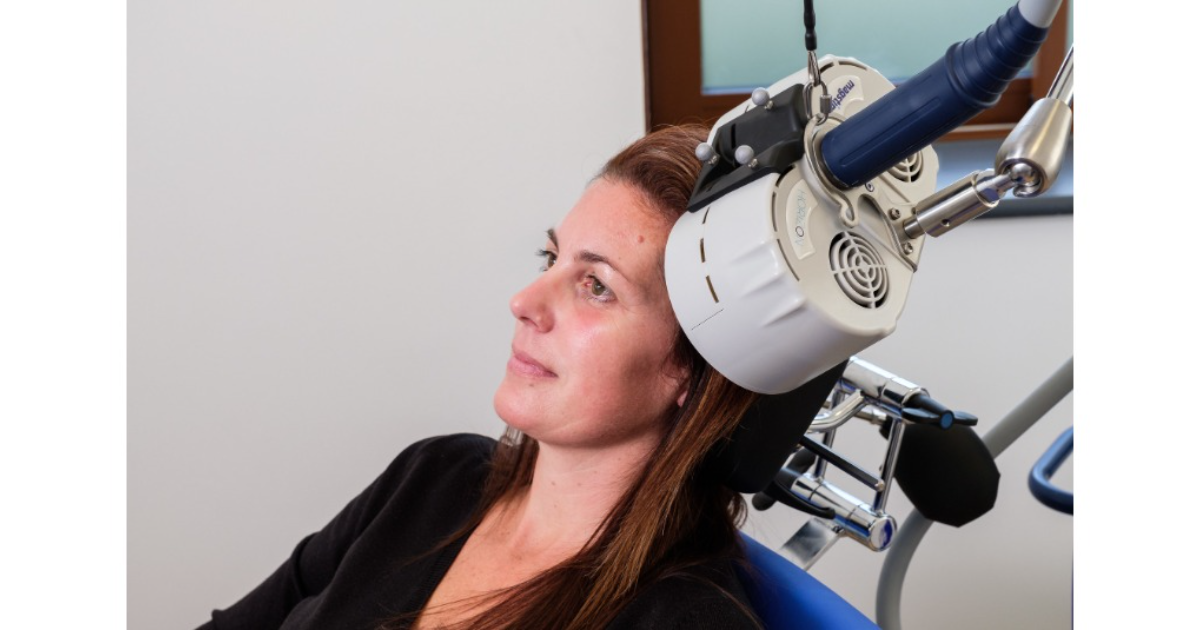
Unlike psychiatric medications that travel through the bloodstream and affect the entire body, TMS is a targeted, localized medical procedure. It uses an electromagnetic coil placed comfortably against the scalp to deliver focused magnetic pulses—similar in strength to an MRI machine—to the dorsolateral prefrontal cortex (DLPFC). This specific region of the brain regulates mood, motivation, and emotional processing, and is often underactive in individuals experiencing clinical depression.
By gently stimulating underactive neurons, TMS encourages neuroplasticity—helping the brain rebuild synaptic connections and naturally release vital neurotransmitters such as serotonin, dopamine, and norepinephrine. Because TMS requires no surgery, no general anesthesia, and no systemic chemicals, patients remain fully awake and comfortable throughout each 20-minute session and can immediately return to work or daily activities.
Is TMS Therapy Safe? An Overview of Clinical Evidence
When evaluating any new medical procedure for clinical depression or anxiety, safety is naturally a top concern. Patients often ask: is TMS therapy safe? Does magnetic brain stimulation carry long-term risks or alter brain tissue negatively?
The short answer from medical research is an overwhelming yes—TMS therapy is widely recognized as one of the safest medical treatments available in modern psychiatry. Cleared by the U.S. Food and Drug Administration (FDA) in 2008 for treatment-resistant Major Depressive Disorder (MDD), Transcranial Magnetic Stimulation (TMS) has a clinical safety record spanning more than two decades and millions of treatment sessions worldwide.
Unlike oral psychiatric medications that affect organs throughout the body, or invasive procedures like Electroconvulsive Therapy (ECT), TMS is a localized physical intervention. It does not require anesthesia, sedation, surgical incisions, or systemic chemical alterations. At our practice led by Dr. Ritesh Amin, MD in Edison, NJ, safety screening and individualized motor-threshold calibration ensure every patient receives treatment optimized for maximum efficacy and comfort.
How TMS Therapy Works Safely in the Brain
To understand why TMS therapy is so safe, it helps to examine how the technology interacts with neural tissue. TMS uses an electromagnetic coil placed comfortably against the scalp to deliver focused magnetic pulses—similar in strength to those produced by a standard MRI machine.
These magnetic fields pass effortlessly and painlessly through the skull to reach the dorsolateral prefrontal cortex (DLPFC), a key region of the brain responsible for mood regulation, executive function, and emotional control. In individuals suffering from clinical depression, neuroimaging studies show that the DLPFC is frequently underactive.
By delivering targeted repetitive pulses (rTMS), the therapy induces gentle electrical micro-currents in underactive neurons. Over a standard 4- to 6-week course of daily 20-minute sessions, these pulses promote neuroplasticity—encouraging neurons to reconnect, form new synaptic pathways, and release natural neurotransmitters such as serotonin, norepinephrine, and dopamine.
Clinical Insight: TMS does not alter who you are or shut down brain function. Instead, it acts like physical therapy for the brain, helping quieted neural circuits resume normal, healthy signaling naturally.
Common vs. Rare Side Effects of TMS Therapy
One of the primary advantages of TMS therapy is its mild side-effect profile. Because TMS operates locally rather than systemically, side effects are overwhelmingly mild, localized to the head or scalp, and temporary.
1. Common, Temporary Side Effects
The vast majority of side effects occur only during or immediately following treatment sessions and diminish significantly as the scalp adapts over the first 1 to 2 weeks of care:
- Scalp Discomfort or Tenderness: Feeling a light tapping or tingling sensation against the scalp while the magnetic coil pulses.
- Mild Tension Headaches: Mild headaches after sessions, which are easily managed with over-the-counter pain relievers like acetaminophen or ibuprofen.
- Facial Muscle Twitching: Minor, transient twitching in the forehead or eye area during active pulse delivery, which stops immediately when pulses cease.
- Lightheadedness: Occasional mild dizziness immediately after standing up from the treatment chair, resolving within a few minutes.
2. Rare Side Effects & Seizure Risk
Serious side effects from TMS are extraordinarily rare when treatment is administered by a qualified psychiatric team:
- Seizure Risk (Extremely Low): The theoretical risk of a seizure during TMS is less than 0.003% per session (or less than 1 in 30,000 treatments). This risk is comparable to or lower than the seizure risk associated with many oral antidepressant medications. Comprehensive pre-treatment screening eliminates candidates with elevated seizure risks.
- Hearing Discomfort: The magnetic coil produces a rhythmic clicking sound during pulse delivery. Patients wear comfortable earplugs during every session to protect hearing completely.
For a deeper clinical analysis of how side effects are managed, read our detailed guide on TMS Therapy Side Effects & Safety Profile.
Long-Term Safety: Does TMS Cause Brain Damage or Memory Loss?
A persistent misconception among patients is that TMS might cause long-term brain damage, cognitive decline, or memory impairment. Medical evidence unequivocally disproves this concern.
Unlike Electroconvulsive Therapy (ECT), which induces a generalized seizure under general anesthesia and carries a known risk of short-term retrograde memory loss, Transcranial Magnetic Stimulation does not affect memory storage or cognitive function.
In fact, extensive clinical studies tracking patients up to 12 to 24 months post-treatment show:
- Zero Cognitive Impairment: Standardized neuropsychological testing confirms no negative impact on memory, attention, executive functioning, or general intelligence.
- Cognitive Enhancement: Many patients actually experience marked improvements in mental clarity, concentration, and working memory as their depressive symptoms resolve.
- No Structural Damage: High-resolution fMRI and MRI brain scans confirm that magnetic pulses cause no tissue scarring, cellular damage, or structural abnormalities in the brain.
Comparing Safety Profiles: TMS vs. Antidepressants vs. ECT
Comparing TMS to traditional psychiatric treatments highlights why so many patients and clinicians prefer non-invasive neuromodulation:
| Safety & Side-Effect Metric | TMS Therapy | Antidepressants (SSRIs/SNRIs) | Electroconvulsive Therapy (ECT) |
|---|---|---|---|
| Systemic Body Distribution | None (Localized) | High (Full Bloodstream) | High (Full Body Anesthesia) |
| Weight Gain / Metabolic Changes | Zero Risk | Common (25%–50% of patients) | Low |
| Sexual Dysfunction / Emotional Numbness | Zero Risk | Very Common (40%–70%) | Occasional |
| Memory Loss / Cognitive Fog | None (Improves Focus) | Frequent ("Brain Fog") | Significant Risk |
| Sedation or General Anesthesia | None (Awake & Alert) | Drowsiness / Fatigue | Required Every Session |
| Post-Session Downtime | Zero (Drive Home Immediately) | Daily Pill Dependency | Full Recovery Day Needed |
FDA Approvals & Regulatory Safety Milestones
FDA clearance represents one of the strongest validation pillars of medical safety. Transcranial Magnetic Stimulation is not experimental; it is an established therapeutic modality supported by thousands of clinical trials:
- 2008: FDA clearance for major depressive disorder (MDD) in adults who failed to achieve satisfactory improvement from prior antidepressant medication.
- 2018: FDA clearance for Obsessive-Compulsive Disorder (OCD) using specialized Deep TMS protocols.
- 2020: FDA clearance for smoking cessation and addiction protocol management.
- 2021+: Expanded FDA clearance for treating depressive symptoms in patients with co-occurring anxiety (anxious depression).
Because of these regulatory approvals and clinical trial outcomes, major medical bodies—including the American Psychiatric Association (APA) and the National Institute for Health and Care Excellence (NICE)—include TMS in their standard clinical guidelines. Furthermore, almost all commercial health insurers, Medicare, and Medicaid cover TMS when clinical criteria are met. To learn more about insurance approval guidelines, read our guide on how much does TMS cost with insurance.
Who Should NOT Get TMS? (Safety Screening & Contraindications)
Although TMS is extraordinarily safe for most people, specific safety contraindications exist. During your initial psychiatric evaluation with Dr. Ritesh Amin in Edison, NJ, we conduct a thorough screening to ensure complete treatment safety.
Strict Contraindications (Ineligible for TMS)
TMS uses strong magnetic fields, which means individuals with ferromagnetic metals or magnetic sensitive devices implanted in or near the head (within 30 cm of the TMS coil) cannot receive treatment:
- Aneurysm clips or coils in the brain
- Stents in the neck or brain blood vessels
- Deep brain stimulators (DBS)
- Cochlear implants or metallic ear implants
- Ocular metallic implants or shrapnel near the head
Note: Standard dental fillings, crowns, braces, and non-magnetic facial implants do NOT interfere with TMS safety and are completely allowed.
Precautions Evaluated on a Case-by-Case Basis
- History of unmanaged seizure disorders or epilepsy
- Presence of cardiac pacemakers or vagus nerve stimulators (VNS) located in the chest
- Severe active substance abuse or acute withdrawal states that lower seizure thresholds
To verify if your clinical history makes you a candidate, consult our guide on who is a good candidate for TMS therapy.
What to Expect During a Safe TMS Treatment Session
Knowing what happens during a treatment session eliminates anxiety and ensures a comfortable clinical experience:
- Initial Motor Threshold Mapping: Before your first treatment session, Dr. Amin performs precise mapping to locate your brain's motor cortex and determine the exact magnetic energy level (motor threshold) required for your unique neuroanatomy.
- Comfortable Recliner Seating: You relax in a quiet, padded treatment chair, fully clothed and completely alert. No sedation or intravenous lines are involved.
- Ear Protection & Coil Placement: You put on light earplugs, and the clinical technician positions the treatment coil gently against your scalp over the target treatment region.
- Active Treatment (20 Minutes): You feel a rhythmic, mild tapping sensation against your scalp as the machine delivers targeted magnetic pulses. You can listen to music, chat with staff, or watch TV during the session.
- Immediate Return to Routine: Once the 20-minute session concludes, you stand up immediately with no motor or memory impairment. You can drive yourself back to work, home, or daily activities straight away.
Why Choose Dr. Ritesh Amin, MD for Safe TMS Therapy in Edison, NJ
TMS therapy is a specialized medical procedure that requires precise clinical oversight to ensure both maximum safety and optimal therapeutic outcome.
At our state-of-the-art mental health facility in Edison, NJ, Dr. Ritesh Amin, MD brings extensive board-certified psychiatric expertise and individualized care to every patient:
- Direct Board-Certified Oversight: Every treatment plan is designed, calibrated, and monitored directly by Dr. Amin.
- State-of-the-Art Neuromodulation Technology: We utilize advanced, FDA-cleared TMS systems equipped with precision positioning to guarantee consistent, safe pulse delivery.
- Integrated Mental Healthcare: We seamlessly coordinate TMS with your existing medication regimen, psychotherapy, or complementary treatments like Spravato.
- Comprehensive Insurance Assistance: Our dedicated administrative team handles all prior authorizations and insurance coverage navigation on your behalf.
Take the First Step Toward Drug-Free Relief
Struggling with depression or anxiety that hasn't responded to medications? Schedule a confidential safety consultation with Dr. Ritesh Amin in Edison, NJ.
Conclusion: A Safe, Proven Path to Recovery
If traditional antidepressants have caused intolerable side effects or failed to alleviate your depression, you do not have to remain stuck. Transcranial Magnetic Stimulation represents a proven, FDA-cleared, non-invasive therapeutic path with one of the cleanest safety profiles in modern medicine.
With zero systemic side effects, no memory loss, no sedation, and zero downtime, TMS offers a transformative way to restore mood balance and reclaim your quality of life. Explore our related articles on Is TMS Therapy Legitimate? and Does TMS Help with Anxiety? to learn more.
Contact our team at Dr. Ritesh Amin's TMS Center in Edison, NJ today to discuss your treatment goals and schedule your comprehensive safety assessment.
Common Questions
Yes. TMS therapy is non-invasive, localized, and FDA-cleared. It uses targeted magnetic pulses similar to an MRI scan to stimulate underactive brain regions without causing brain tissue damage or cellular injury.
No. Unlike ECT (electroconvulsive therapy), TMS does not affect memory storage or cognitive function. Clinical trials show zero memory loss, and many patients report improved focus and mental clarity as depression resolves.
The most common side effects are mild scalp discomfort, light headaches, or minor facial muscle twitching during sessions. These effects are mild, temporary, and usually subside within the first week or two of treatment.
The risk of a seizure during TMS is extremely low—less than 0.003% per session (under 1 in 30,000 treatments). Comprehensive pre-treatment screening eliminates patients with pre-existing seizure risks to ensure safety.
Yes. Because TMS involves no general anesthesia, sedation, or cognitive impairment, you are fully alert immediately after your 20-minute session and can safely drive yourself home or back to work.
Patients with non-removable ferromagnetic metal implants in or near the head (such as aneurysm clips, metallic brain stents, deep brain stimulators, or cochlear implants) cannot receive TMS. Standard dental work or braces are completely safe.
Have more safety questions? Schedule a consultation →