TMS for Stroke Recovery | Dr. Ritesh Amin – Edison, NJ
Neurology & Brain Stimulation

TMS for Stroke Recovery in Edison, NJ

Rebuilding neural pathways damaged by stroke — restoring motor control, speech, and quality of life through precision magnetic stimulation.

795K
Strokes Per Year in the US
87%
Are Ischemic Strokes
FDA
Cleared Technology
Systemic Side Effects

TMS for Post-Stroke Recovery

Reviving dormant neural circuits and accelerating neuroplasticity to restore function after ischemic and hemorrhagic strokes.

A stroke interrupts blood flow to the brain, killing neurons and leaving surrounding "penumbral" tissue in a state of chronic under-activity. These surviving neurons represent the key opportunity for recovery — and TMS is uniquely capable of reactivating them.

High-frequency excitatory TMS applied to the affected hemisphere can reactivate these silent circuits and drive formation of new neural pathways. Applied to the unaffected hemisphere, inhibitory TMS reduces compensatory over-inhibition and restores neural balance between hemispheres.

Research shows TMS combined with physical therapy produces significantly greater motor gains than physical therapy alone — particularly when started within 3–12 months of stroke onset.

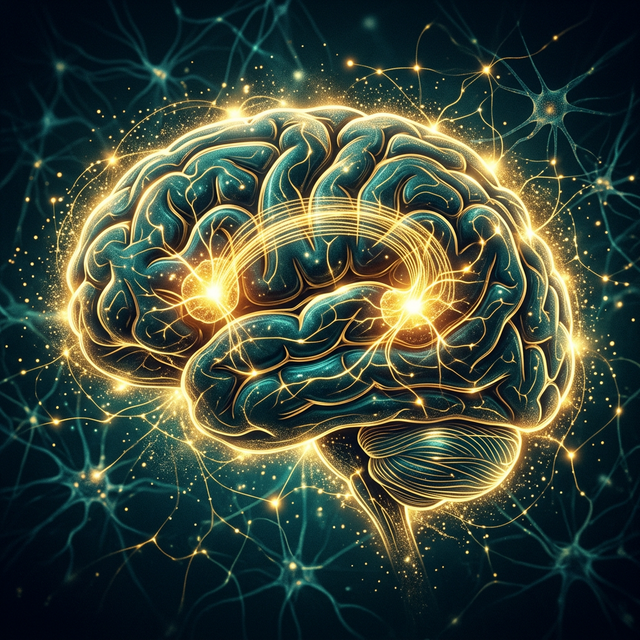
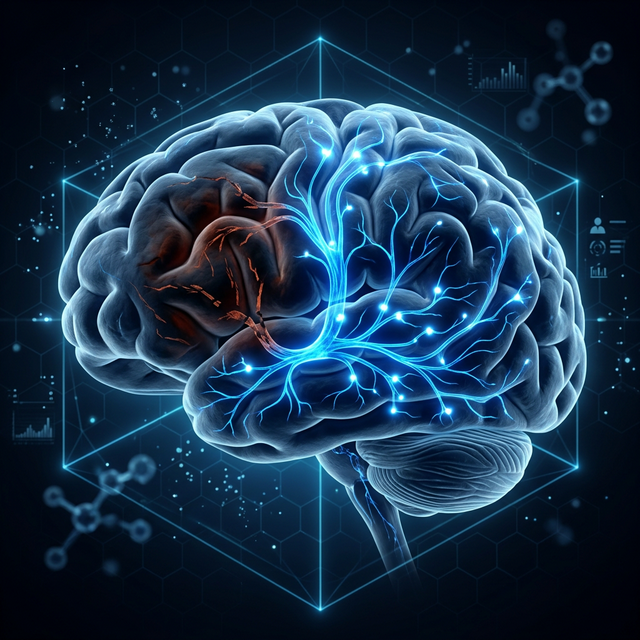
Brain scan showing post-stroke penumbra and TMS stimulation target area

Post-stroke deficits TMS commonly addresses:

Hemiplegia & Hemiparesis

One-sided weakness or paralysis from damage to the contralateral motor cortex and corticospinal tract.

Spasticity

Involuntary muscle stiffness and spasms following damage to motor control pathways, limiting daily function.

Post-Stroke Depression

Up to 33% of stroke survivors develop major depression. TMS is FDA-cleared for depression and highly effective here.

TMS for Paralysis & Motor Weakness

Unlocking residual motor potential and rewiring damaged motor pathways to rebuild strength and coordination.

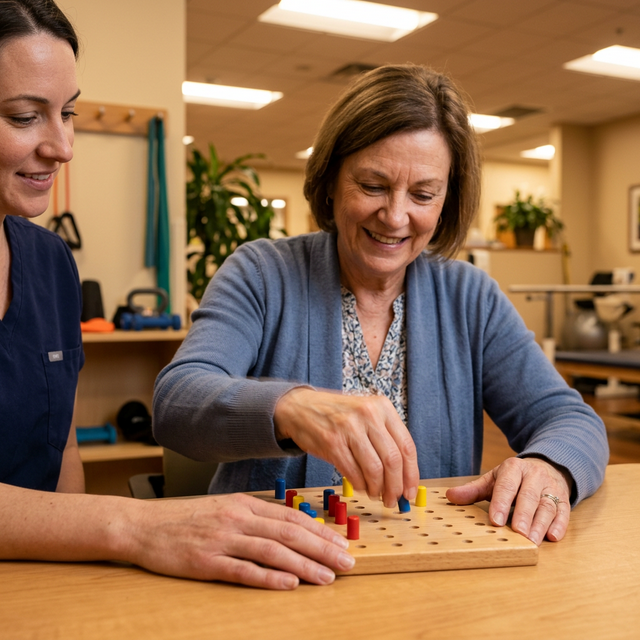
Patient undergoing motor rehabilitation with TMS brain stimulation support

Even when paralysis appears complete, many patients retain residual corticospinal connectivity that is functionally suppressed. TMS exploits this residual connectivity to reactivate dormant motor pathways.

Excitatory high-frequency TMS (10 Hz or iTBS) over the ipsilesional motor cortex increases its output to the spinal cord, while inhibitory TMS over the contralesional motor cortex reduces pathological interhemispheric inhibition. This dual-site protocol dramatically enhances motor rehabilitation outcomes.

01

Cortical Excitability Assessment

TMS motor mapping measures residual corticospinal connectivity before designing your personalized protocol.

02

Dual-Site Stimulation

Excitatory TMS to the lesioned hemisphere and inhibitory TMS to the healthy hemisphere, restoring neural balance.

03

Motor Training Integration

Targeted physiotherapy immediately following TMS capitalizes on heightened cortical excitability for maximum gains.

DeficitTMS ProtocolExpected Benefit
Arm & Hand WeaknessExcitatory 10Hz over M1 lesioned sideImproved grip strength & fine motor control
Leg & Gait ImpairmentiTBS over lower limb motor cortexImproved walking speed & balance
SpasticityInhibitory 1Hz over contralesional M1Reduced muscle tone & spasms

TMS for Aphasia & Speech Recovery

Restoring the power of communication by reactivating language networks and reducing compensatory speech suppression.

Aphasia affects approximately 180,000 Americans annually, almost always from stroke. When stroke damages Broca's or Wernicke's area, the right hemisphere attempts to compensate — but this can actually suppress recovery of left hemisphere language networks.

Inhibitory TMS applied to right-hemisphere speech areas removes this maladaptive compensation and allows damaged left hemisphere networks to re-emerge. Combined with intensive speech therapy after each session, language recovery is significantly accelerated.

Published research demonstrates that inhibitory TMS combined with speech therapy produces greater improvements in naming, fluency, and comprehension than speech therapy alone.

Language network diagram showing Broca's area and TMS target for aphasia
Aphasia TypeTMS Approach
Broca's (Expressive) AphasiaInhibitory TMS to right IFG to release suppression on left Broca's area; paired with speech output tasks.
Wernicke's (Receptive) AphasiaExcitatory TMS to perilesional left temporal areas combined with comprehension-focused language therapy.
Global AphasiaSequential bilateral TMS protocol addressing both production and comprehension networks.
Your Comfort Matters

Experience Our Healing Environment

Take a look at our state-of-the-art TMS treatment rooms designed for your relaxation.

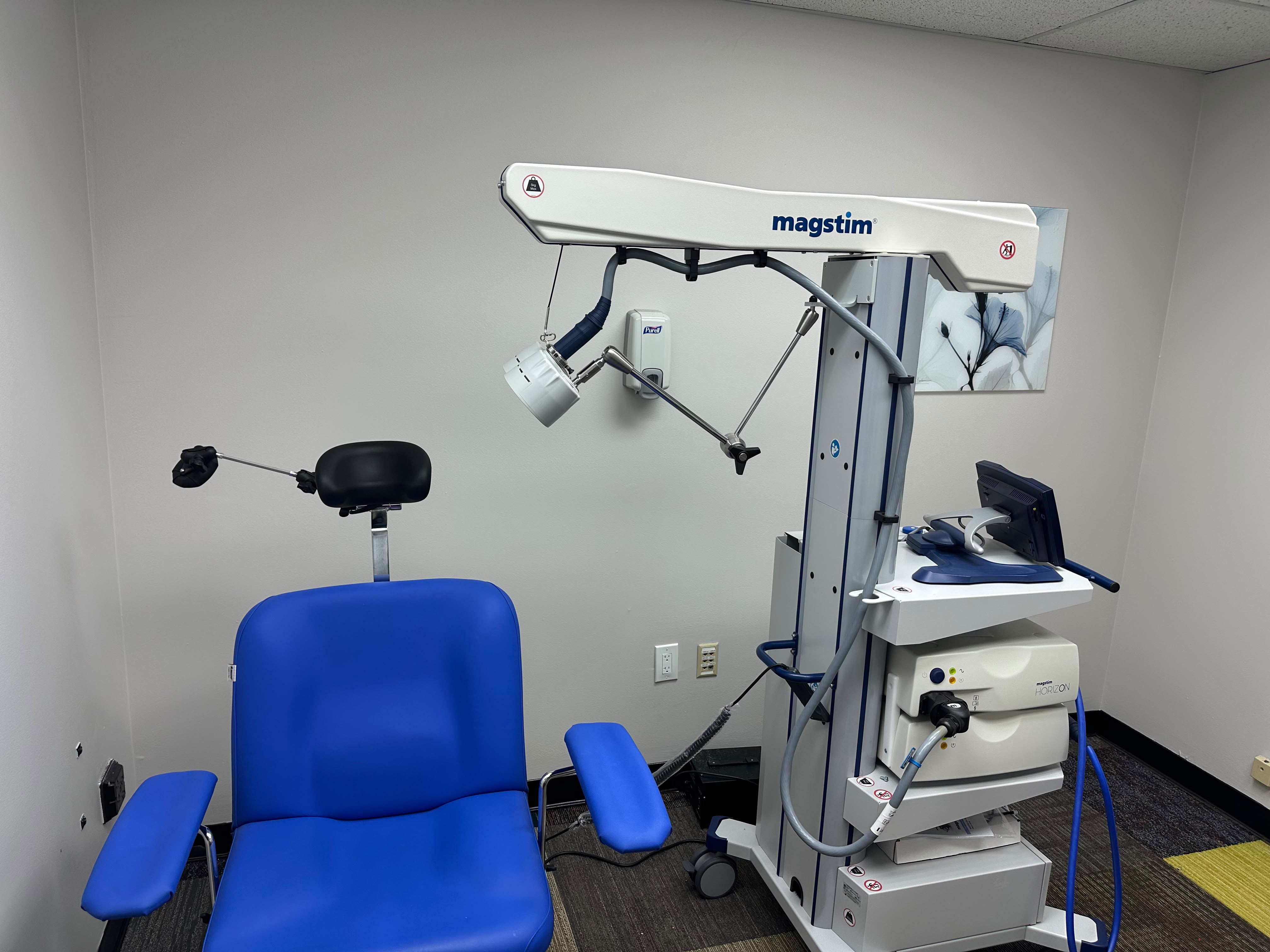
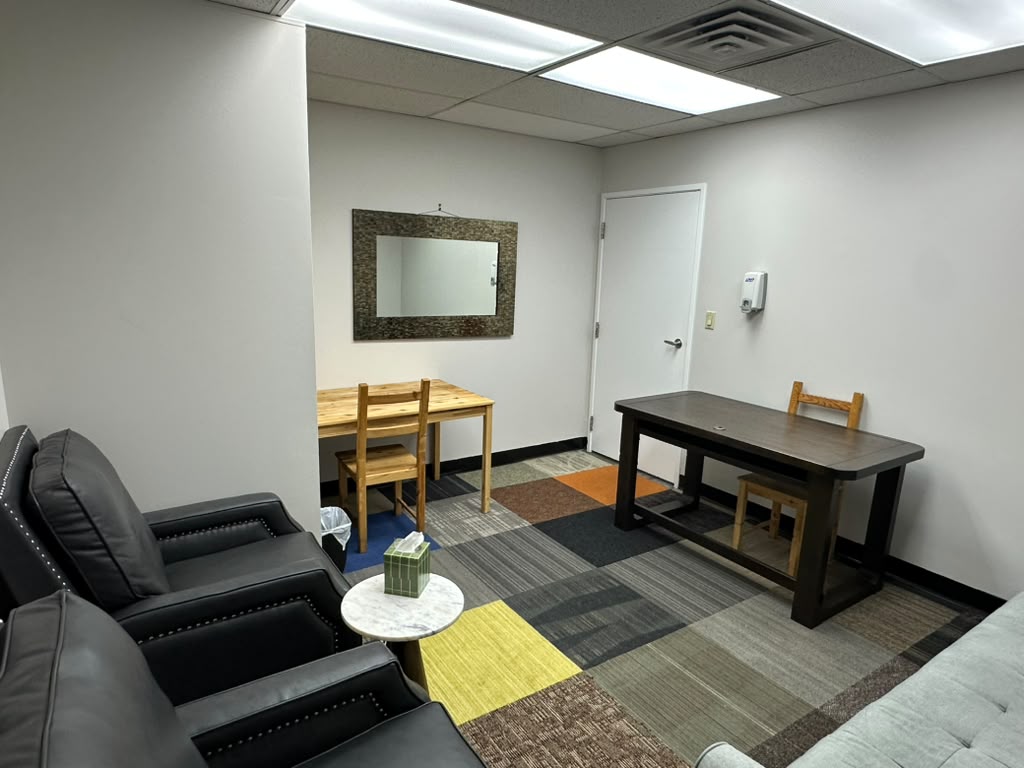
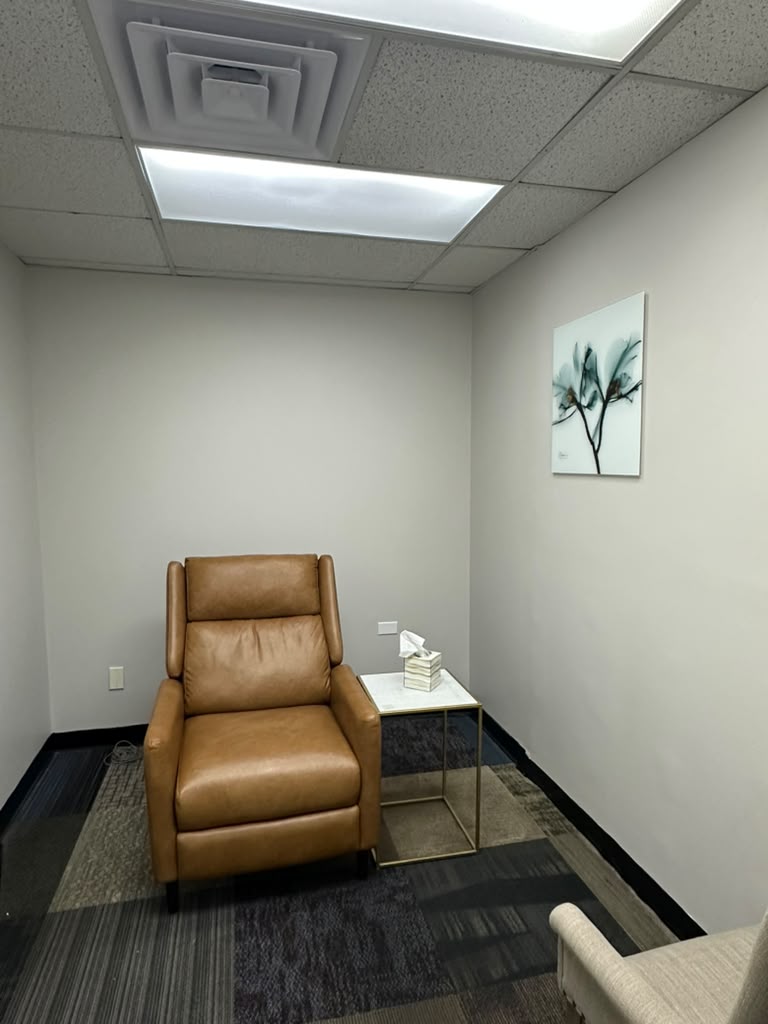
TMS Treatment Room at Dr. Ritesh Amin's Clinic
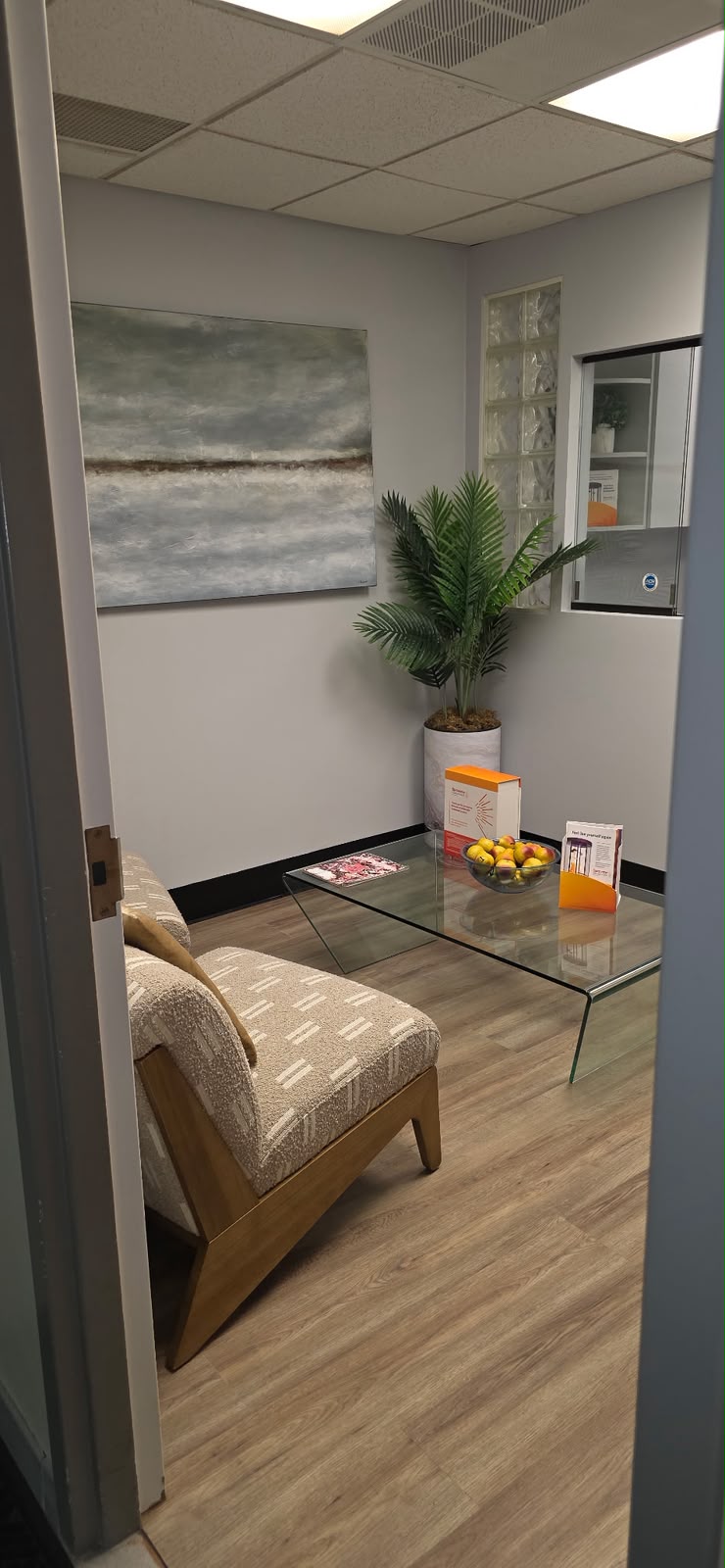
TMS Therapy Room
TMS Equipment
Relaxing Patient Experience

During your daily sessions, you will relax in our comfortable treatment chair. You can watch TV, listen to music, read a book, or simply close your eyes. The treatment is completely non-invasive, and our dedicated team is always present to ensure your utmost comfort.

Our Philosophy

A Comprehensive Approach to Stroke Rehabilitation

Cortical Mapping

TMS motor mapping to measure residual connectivity and identify optimal stimulation targets before treatment.

Precision Stimulation

Excitatory and inhibitory TMS protocols precisely targeted to the lesioned and peri-lesional cortex, calibrated to each patient.

Synergistic Rehab

TMS sessions immediately followed by physical, occupational, or speech therapy — maximizing the neuroplastic window.

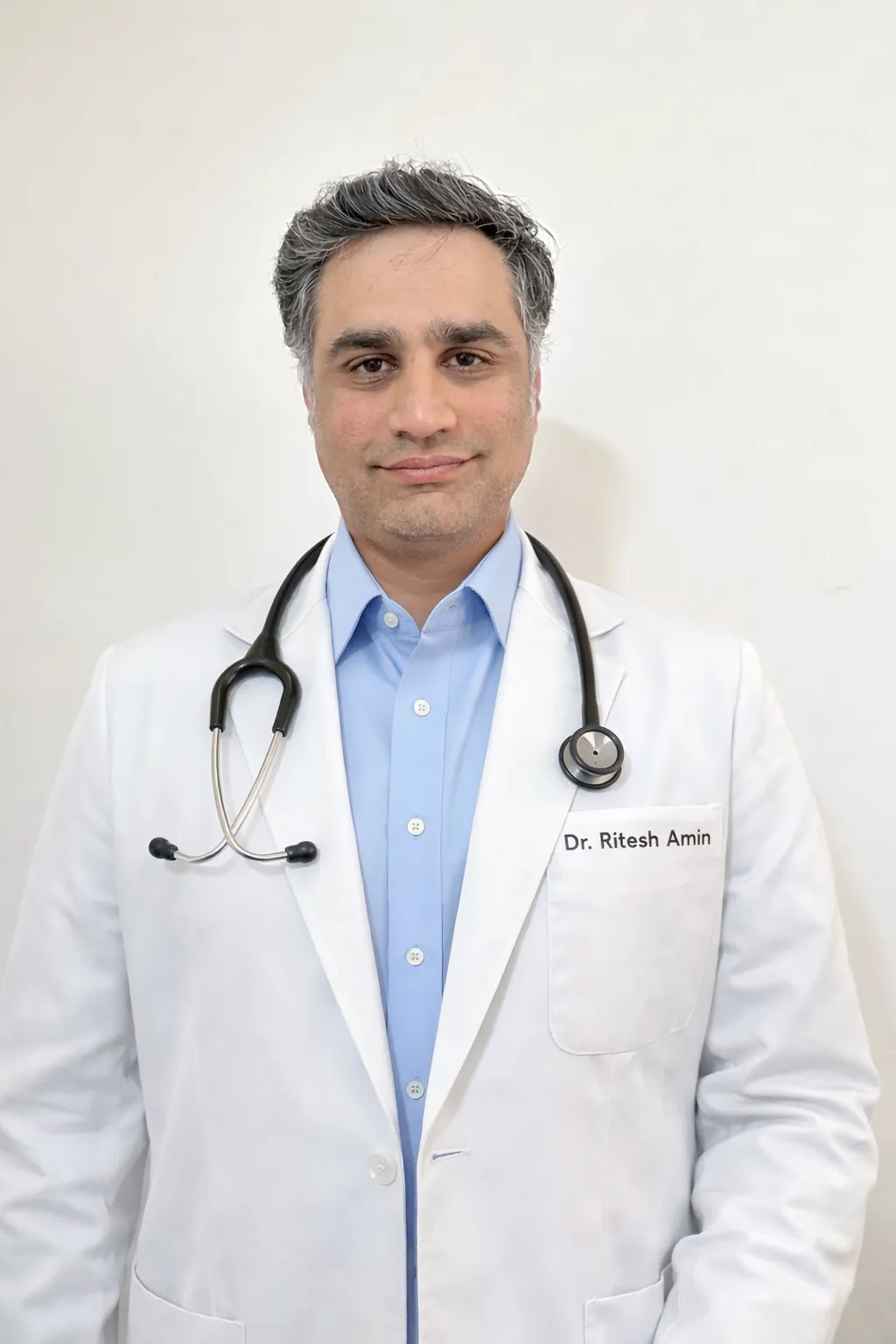
Dr. Ritesh Amin
Leading the Field in Neuromodulation

Meet Dr. Ritesh Amin, MD

Board Certified Psychiatrist & TMS Specialist

With over 15 years of clinical excellence, Dr. Amin applies cutting-edge TMS protocols for stroke rehabilitation — addressing motor recovery, aphasia, and the depression and cognitive challenges that accompany stroke.

Read Full Biography
Patient Stories

Real People, Real Results

Hear from patients whose lives were transformed through Dr. Amin's care.

Marietta Baranca

★★★★★
I've been dealing with depression and PTSD for years and Dr. Amin's TMS Therapy has honestly saved my life. I'm someone who does not respond well to depression medication, so TMS was a godsend for me. I went from crying for no reason almost every day to feeling more stable and even optimistic. Dr. Amin is really invested in my mental health and Charlie, the TMS technician, is very helpful in making the treatments go by quickly and swiftly. I don't even want to imagine what my life would have been like without these treatments these past few years.
Google Review

Ganesh

★★★★★
Dr Amin helped me a lot with my persistent depression, anxiety and attention deficit issues. He is excellent at establishing a good relationship with the patient and helped understand more about these conditions and what he was looking to achieve through the treatment. Would highly recommend him.
Google Review

Kavita Ingle

★★★★★
Amazing experience with Dr. Amin. He helped me get out of my anxiety in just 2 months. He is very responsive, follows up personally, and is always available when you need to talk. Highly recommended! I had a wonderful experience with Nurse Melissa. She genuinely cares about her patients, and it shows in how she handles them. Thank You Dr Amin.
Google Review

Jeanne Hambrecht

★★★★★
I've been experiencing night terrors for a few years. I called Dr Amin immediately and he called me back right away. He told me he could help me. He came up with a medical plan with his diagnosis and that's what we're doing now. Dr. Amin is not aggressive and started very cautious with treatment because of my family history. Dr. Amin calls me to follow up on how I'm feeling. I highly recommend his practice. They answer in a timely manner. Everyone is very nice.
Google Review

Athena Xipolias

★★★★★
Dr. Amin saved me from my horrible OCD. Thank god for him. I originally went to him for a second opinion. I decided to take a leap of faith and start TMS after I had a bad OCD episode. It was rough in the beginning when I first started TMS but I persevered my way through and I'm so glad I did. I'm just about half way through and I see so many benefits already. I have my life back. I feel such relief — I can rationalize my thoughts and emotions so much better now. Overall I'm a better person. Thank you x1000 Dr. Amin!!!
Google Review

Kathryn Mahaney

★★★★★
With professionalism and empathy, Dr Amin and Dr R. Truly are a rarity in today's world of Psychiatry. Incredibly knowledgeable and they are excellent patient advocates. Highly Recommend!
Google Review

Syeda Shebah Ali

★★★★★
Before becoming a patient of Dr. Amin, I was experiencing persistent cognitive fog, chronic depression, and generalized anxiety that significantly impacted my ability to function day to day. Since implementing Dr. Amin's comprehensive recommendations, my cognitive clarity has returned, my mood has stabilized, and I now have the energy and confidence to manage daily tasks and engage in social environments without fear. Dr. Amin's thoughtful and integrative approach to treatment has been transformative. His attention to detail and commitment to addressing root causes — rather than just symptoms — has helped me reclaim both my functionality and quality of life. I am truly grateful for the care I've received.
Google Review

Deolinda Amaral

★★★★★
Thank you for the help. After the stroke, my husband improved in his speech, walking and memory with TMS for his Depression. Best doctor ever.
Google Review

Punam Patel

★★★★★
Dr Singh and Dr Amin are phenomenal. They go above and beyond for their patients.
Google Review

Sharon Page

Local Guide · 15 reviews
★★★★★
I have been a patient with NJ Healthy Minds for the past couple of years, and choosing them has been one of the best decisions I've made for myself. Everyone I've encountered has been kind, compassionate, supportive, and consistent. The passion and care they show truly reflect their purpose and the positive impact they make in people's lives every day. I am not the same person I was when I first came to them. Their support has made a tremendous difference in my life, and for that I am deeply grateful. Dr Amin & staff, you rock.
Google Review

Ann Rappaport

Local Guide · 33 reviews
★★★★★
Dr Amin is a very caring doctor. He helped me regain my peace via TMS therapy. He took whatever time was required to explain in detail what to expect. Unlike most in his field, he returns calls with urgency. I love having him as my doctor.
Google Review

Read all patient reviews

Frequently Asked Questions

Stroke Recovery TMS FAQs

After a stroke, the uninjured hemisphere often becomes hyperactive, suppressing the injured side. TMS is used to calm the healthy hemisphere, allowing the damaged side to heal and reorganize (neuroplasticity).
Yes, by stimulating the language centers of the brain (like Broca's area), TMS has shown significant promise in improving speech production and comprehension during stroke recovery.
When combined with physical therapy, TMS primes the motor cortex, significantly enhancing the brain's ability to relearn movements and accelerating the recovery of motor function in affected limbs.
Research suggests that starting TMS during the subacute phase (weeks to a few months after the stroke) yields the best results for harnessing peak neuroplasticity, though chronic stroke survivors can also benefit.
Yes, TMS is safely used in stroke rehabilitation. Dr. Amin carefully reviews each patient's brain imaging and medical history to apply customized, safe stimulation protocols.
Take the First Step

Is TMS Right for Your Stroke Recovery?

Dr. Amin evaluates residual neural connectivity and designs a personalized TMS protocol for your stroke profile and recovery goals.

Recovery Begins Here

Reclaim Life After Stroke

Advanced TMS therapy can help you move past the plateau. Dr. Amin is ready to guide your recovery.

Book Your Consultation Today

Also explore TMS for Brain Injury and TMS for Parkinson's.