TMS Therapy for Huntington's Disease (HD) | Dr. Ritesh Amin – Edison, NJ
Neurology & Brain Stimulation

TMS for Huntington's Disease (HD) in Edison, NJ

Addressing the psychiatric and cognitive symptoms of Huntington's Disease through targeted, non-invasive brain stimulation to improve quality of life.

Non-Inv
Non-Invasive Therapy
Neuro
Neuroprotective Potential
Dual
Motor & Mood Relief
Systemic Side Effects

Understanding Huntington's Disease

A hereditary neurodegenerative disorder that progressively destroys neurons in the basal ganglia and cerebral cortex.

Huntington's Disease (HD) is caused by an expansion of the CAG trinucleotide repeat in the HTT gene, leading to progressive degeneration of the striatum (caudate nucleus and putamen) and later the cerebral cortex. This neuronal loss produces the classic triad of motor, cognitive, and psychiatric symptoms.

While HD is a genetic condition with no current cure, the psychiatric and cognitive symptoms—which often emerge years before motor symptoms—are among the most distressing for patients and families. Depression affects up to 40% of HD patients, and irritability, apathy, and executive dysfunction severely impair daily functioning and independence.

Emerging research suggests that TMS may have neuroprotective properties, potentially promoting brain-derived neurotrophic factor (BDNF) release—a protein critical for neuronal survival that is depleted in HD.

Neurologist providing empathetic support to a Huntington's disease patient

How TMS Addresses HD Symptoms

Modulating cortical circuits that compensate for basal ganglia dysfunction to improve mood, cognition, and motor control.

Clinical consultation for Huntington's Disease symptoms

In Huntington's Disease, the cortex attempts to compensate for the failing basal ganglia by reorganizing its own circuits. TMS can support this compensatory process by strengthening cortical activity in regions that are still functional, particularly the dorsolateral prefrontal cortex (DLPFC) for depression and executive function, and the supplementary motor area (SMA) for motor control.

High-frequency rTMS to the DLPFC has shown promise in alleviating the severe depression and apathy that accompanies HD. Additionally, protocols targeting motor areas can help modulate the cortical hyperexcitability that contributes to chorea (involuntary movements), offering a non-pharmacological alternative to drugs like tetrabenazine that often worsen depression.

01

Comprehensive Mapping

Assessment of motor, cognitive, and psychiatric symptoms to identify priority brain targets and develop a personalized protocol.

02

Targeted Stimulation

Precise magnetic pulses to the DLPFC for mood and cognition, and SMA for motor symptoms, adapted to the patient's disease stage.

03

Ongoing Optimization

Regular reassessment and protocol adjustment as HD progresses, ensuring TMS continues to target the most impactful symptoms.

HD Symptoms TMS Can Address

Targeting both the psychiatric burden and the motor dysfunction of Huntington's Disease.

Depression & Apathy

Activating the underactive prefrontal cortex to lift the pervasive depression and motivational deficit seen in HD.

Chorea

Modulating cortical excitability to help reduce the involuntary, dance-like movements characteristic of HD.

Cognitive Decline

Supporting executive function, attention, and processing speed by stimulating the prefrontal cortex networks.

Irritability & Aggression

Restoring prefrontal inhibitory control over emotional responses to reduce outbursts and improve social functioning.

Sleep Disturbances

Regulating circadian rhythm disruptions common in HD through modulation of cortical arousal networks.

Anxiety & OCD Symptoms

Modulating the cortico-striatal circuits involved in the obsessive and anxious features frequently seen in HD.

FeatureStandard HD MedicationsTMS Therapy
Depression TreatmentSSRIs—may worsen motor symptoms in some patients.Directly activates prefrontal mood circuits without systemic effects.
Chorea ManagementTetrabenazine—effective but commonly worsens depression.Modulates cortical excitability without depleting dopamine.
Cognitive SupportNo approved pharmacological options available.Enhances prefrontal cortex function and BDNF release.
Side EffectsSedation, weight gain, worsened mood, parkinsonism.Zero systemic side effects. Well-tolerated.
Your Comfort Matters

Experience Our Healing Environment

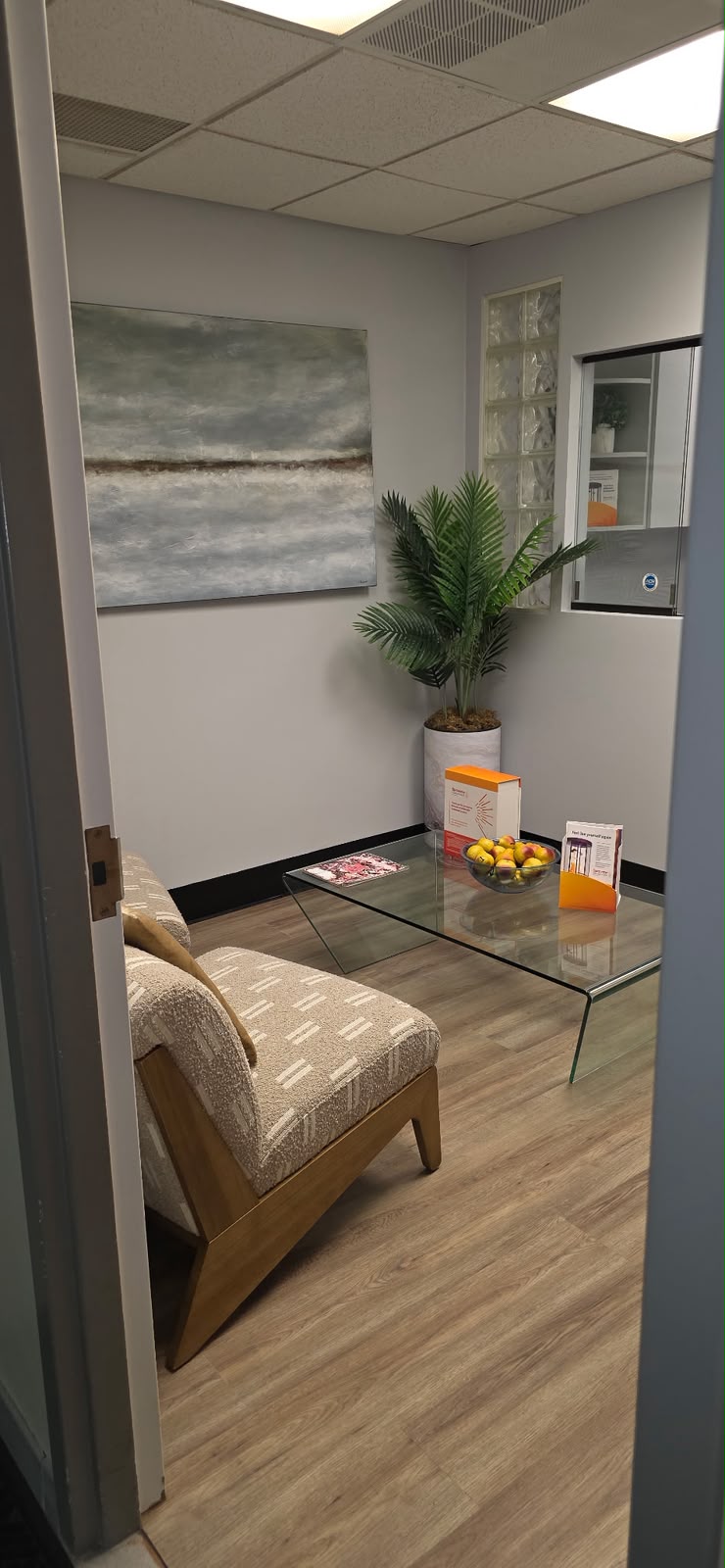
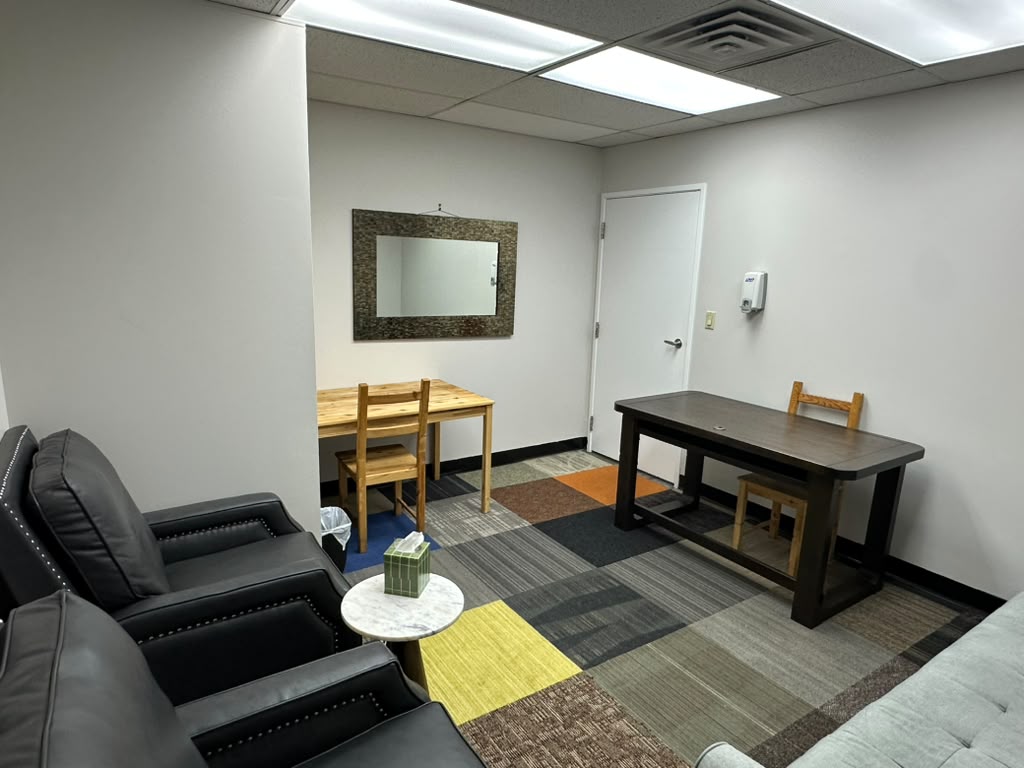
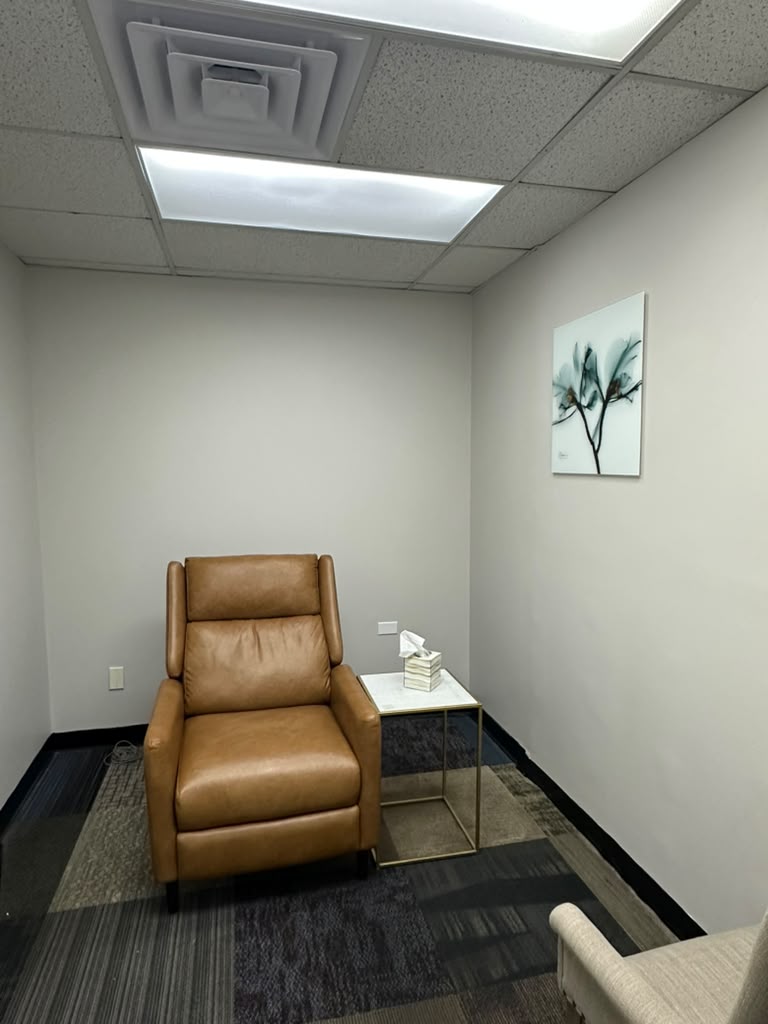
Take a look at our state-of-the-art TMS treatment rooms designed for your relaxation.

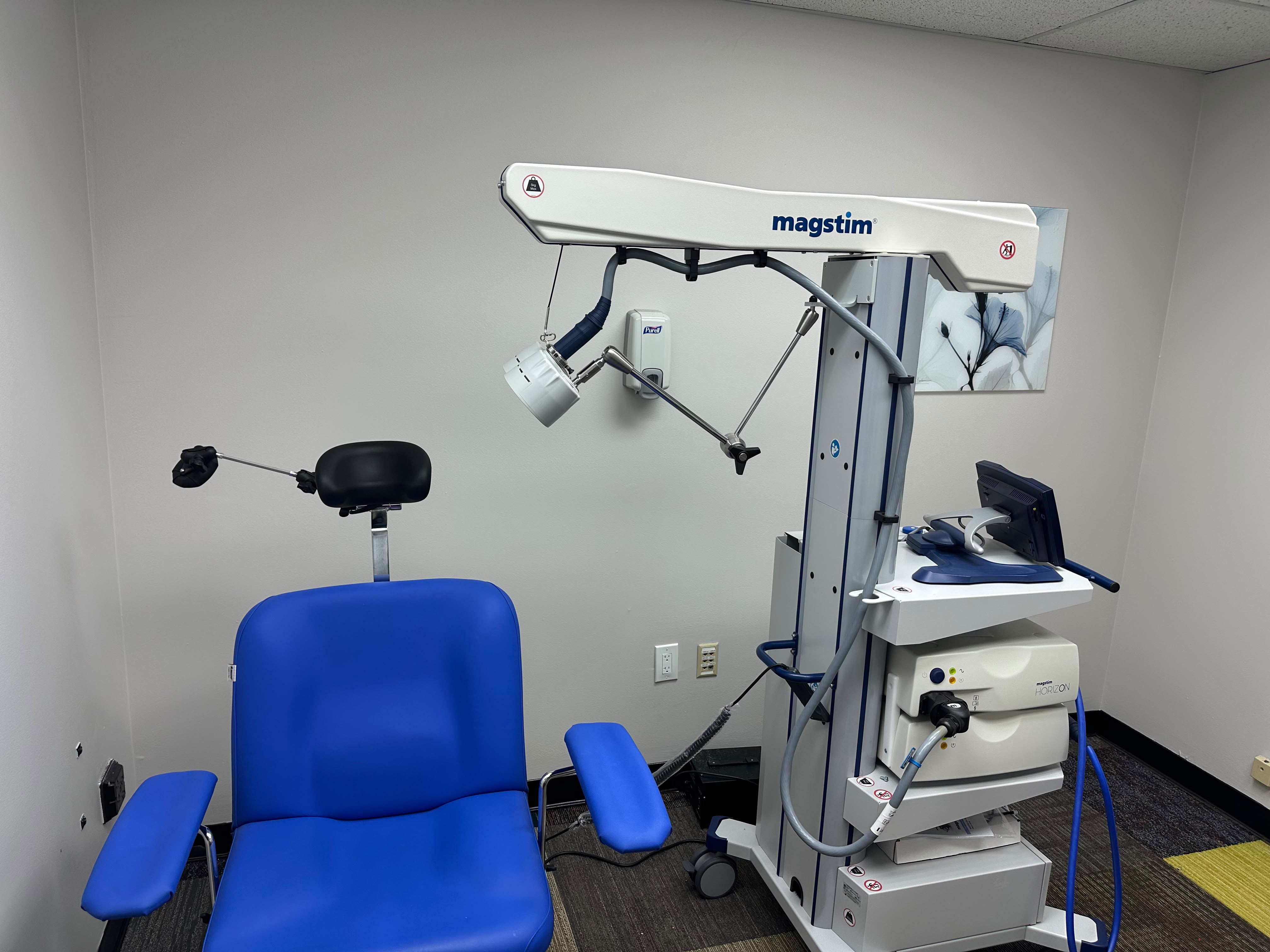
TMS Treatment Room at Dr. Ritesh Amin's Clinic
TMS Therapy Room
TMS Equipment
Relaxing Patient Experience

During your daily sessions, you will relax in our comfortable treatment chair. You can watch TV, listen to music, read a book, or simply close your eyes. The treatment is completely non-invasive, and our dedicated team is always present to ensure your utmost comfort.

Comprehensive HD Care

A Multi-Dimensional Approach

Addressing the full triad of HD symptoms—motor, cognitive, and psychiatric—through targeted neuromodulation.

Stage-Adapted Protocols

TMS protocols are adjusted based on the patient's current HD stage—from pre-manifest gene carriers experiencing only psychiatric symptoms to those with advanced motor involvement.

BDNF Enhancement

Research indicates TMS promotes BDNF release—a key neurotrophic factor depleted in HD. This may support neuronal survival and slow the trajectory of cognitive decline.

Medication Synergy

TMS works alongside existing HD medications, potentially allowing dose reductions of drugs like tetrabenazine that carry significant psychiatric side effects.

Dr. Ritesh Amin
Specialist in Neuropsychiatry

Meet Dr. Ritesh Amin, MD

Board Certified Psychiatrist & TMS Specialist

Dr. Amin recognizes the unique challenge Huntington's Disease presents—a condition where standard psychiatric medications can worsen motor symptoms, and motor medications can worsen mood. TMS offers a way to treat the psychiatric and cognitive dimensions of HD without these pharmacological trade-offs, giving patients and families meaningful improvements in quality of life.

Read Full Biography
Patient Stories

Real People, Real Results

Hear from patients whose lives were transformed through Dr. Amin's care.

Marietta Baranca

★★★★★
I've been dealing with depression and PTSD for years and Dr. Amin's TMS Therapy has honestly saved my life. I'm someone who does not respond well to depression medication, so TMS was a godsend for me. I went from crying for no reason almost every day to feeling more stable and even optimistic. Dr. Amin is really invested in my mental health and Charlie, the TMS technician, is very helpful in making the treatments go by quickly and swiftly. I don't even want to imagine what my life would have been like without these treatments these past few years.
Google Review

Ganesh

★★★★★
Dr Amin helped me a lot with my persistent depression, anxiety and attention deficit issues. He is excellent at establishing a good relationship with the patient and helped understand more about these conditions and what he was looking to achieve through the treatment. Would highly recommend him.
Google Review

Kavita Ingle

★★★★★
Amazing experience with Dr. Amin. He helped me get out of my anxiety in just 2 months. He is very responsive, follows up personally, and is always available when you need to talk. Highly recommended! I had a wonderful experience with Nurse Melissa. She genuinely cares about her patients, and it shows in how she handles them. Thank You Dr Amin.
Google Review

Jeanne Hambrecht

★★★★★
I've been experiencing night terrors for a few years. I called Dr Amin immediately and he called me back right away. He told me he could help me. He came up with a medical plan with his diagnosis and that's what we're doing now. Dr. Amin is not aggressive and started very cautious with treatment because of my family history. Dr. Amin calls me to follow up on how I'm feeling. I highly recommend his practice. They answer in a timely manner. Everyone is very nice.
Google Review

Athena Xipolias

★★★★★
Dr. Amin saved me from my horrible OCD. Thank god for him. I originally went to him for a second opinion. I decided to take a leap of faith and start TMS after I had a bad OCD episode. It was rough in the beginning when I first started TMS but I persevered my way through and I'm so glad I did. I'm just about half way through and I see so many benefits already. I have my life back. I feel such relief — I can rationalize my thoughts and emotions so much better now. Overall I'm a better person. Thank you x1000 Dr. Amin!!!
Google Review

Kathryn Mahaney

★★★★★
With professionalism and empathy, Dr Amin and Dr R. Truly are a rarity in today's world of Psychiatry. Incredibly knowledgeable and they are excellent patient advocates. Highly Recommend!
Google Review

Syeda Shebah Ali

★★★★★
Before becoming a patient of Dr. Amin, I was experiencing persistent cognitive fog, chronic depression, and generalized anxiety that significantly impacted my ability to function day to day. Since implementing Dr. Amin's comprehensive recommendations, my cognitive clarity has returned, my mood has stabilized, and I now have the energy and confidence to manage daily tasks and engage in social environments without fear. Dr. Amin's thoughtful and integrative approach to treatment has been transformative. His attention to detail and commitment to addressing root causes — rather than just symptoms — has helped me reclaim both my functionality and quality of life. I am truly grateful for the care I've received.
Google Review

Deolinda Amaral

★★★★★
Thank you for the help. After the stroke, my husband improved in his speech, walking and memory with TMS for his Depression. Best doctor ever.
Google Review

Punam Patel

★★★★★
Dr Singh and Dr Amin are phenomenal. They go above and beyond for their patients.
Google Review

Sharon Page

Local Guide · 15 reviews
★★★★★
I have been a patient with NJ Healthy Minds for the past couple of years, and choosing them has been one of the best decisions I've made for myself. Everyone I've encountered has been kind, compassionate, supportive, and consistent. The passion and care they show truly reflect their purpose and the positive impact they make in people's lives every day. I am not the same person I was when I first came to them. Their support has made a tremendous difference in my life, and for that I am deeply grateful. Dr Amin & staff, you rock.
Google Review

Ann Rappaport

Local Guide · 33 reviews
★★★★★
Dr Amin is a very caring doctor. He helped me regain my peace via TMS therapy. He took whatever time was required to explain in detail what to expect. Unlike most in his field, he returns calls with urgency. I love having him as my doctor.

Google Review

Read all patient reviews

Frequently Asked Questions

Treatment FAQs

Currently, there is no treatment that stops the progression of HD. However, TMS is used to manage and mitigate severe motor and psychiatric symptoms to improve daily quality of life.
By applying low-frequency, inhibitory magnetic pulses to the hyper-excitable motor cortex, TMS can help suppress the abnormal neural firing that causes chorea and involuntary movements.
Yes, depression, apathy, and irritability are hallmark psychiatric symptoms of HD. TMS is highly effective at treating these symptoms by stimulating the brain's mood-regulating centers.
Yes, TMS is non-invasive and does not rely on systemic drugs, meaning it will not burden the liver or kidneys, making it a safe palliative tool for complex neurodegenerative disorders.
Because HD is progressive, patients may undergo an initial acute phase of daily treatments, followed by an ongoing maintenance schedule (e.g., once a week) to sustain the benefits.
Hope for HD

Living with Huntington's Disease?

If medications aren't adequately managing the psychiatric or cognitive symptoms of HD, explore how targeted TMS can help.

Reclaim Quality of Life

Manage HD Symptoms Differently

Non-invasive. Non-pharmacological. Discover how TMS can address the psychiatric and cognitive burden of Huntington's Disease.

Book Your Consultation Today

Also explore TMS for Alzheimer's and TMS for Stroke Recovery.