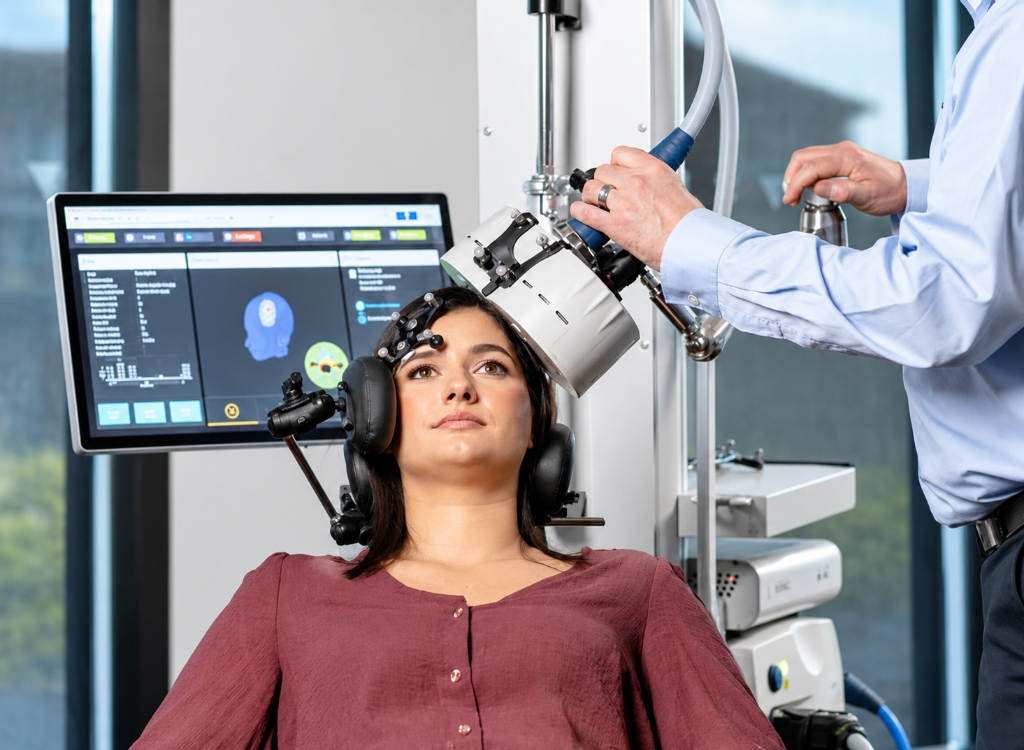
Does TMS Therapy Work for Anxiety?
Yes, TMS therapy works effectively for anxiety disorders. Clinical trials and psychiatric registry data confirm that between 50% and 70% of patients achieve clinically significant anxiety reduction with Transcranial Magnetic Stimulation. Instead of circulating pharmaceuticals throughout the entire body, TMS uses focused, non-invasive magnetic pulses to rebalance hyperactive emotional circuits—specifically down-regulating an overstimulated right dorsolateral prefrontal cortex and calming an agitated amygdala.
TMS is particularly effective for individuals with anxious depression (Major Depressive Disorder with comorbid generalized anxiety) as well as treatment-resistant Generalized Anxiety Disorder (GAD), panic disorder, and PTSD. Because TMS requires no anesthesia, causes no systemic drug side effects, and produces zero cognitive fog, it offers a proven non-pharmacological solution. At the Central New Jersey psychiatric practice of Dr. Ritesh Amin, MD in Edison, NJ, patients receive personalized neuromodulation protocols engineered to quiet persistent worry and restore emotional resilience.
TMS for Depression Is Well Established. What About Anxiety?
Since the FDA first cleared Transcranial Magnetic Stimulation for treatment-resistant major depression in 2008, TMS has gained worldwide acclaim as one of psychiatry's most reliable non-drug therapies. Millions of clinical sessions have proven that magnetic pulses safely restore function to depressed neural circuits.
While depression typically stems from hypoactivity (under-firing) in the left prefrontal cortex, anxiety disorders involve hyperactivity (excessive electrical firing) in the right prefrontal cortex and limbic fear centers. By applying low-frequency inhibitory pulses (1 Hz) to quiet overactive circuits rather than high-frequency excitatory pulses, clinicians achieve the same therapeutic precision for anxiety as they do for depression. Today, anxiety is one of the most clinically demanded applications for TMS therapy.
What Is TMS Therapy? A Quick Clinical Overview
Transcranial Magnetic Stimulation (TMS) is an outpatient medical procedure that modulates brain activity using focused magnetic fields. Unlike electroconvulsive therapy (ECT), TMS does not induce seizures, requires no anesthesia or muscle relaxants, and causes no memory loss or cognitive impairment.
- Direct Neurological Action: An electromagnetic coil placed against the scalp delivers magnetic pulses similar in strength to an MRI scan, directly stimulating target cortical neurons.
- Non-Systemic Safety: Pulses act locally on mood circuits without circulating through the digestive tract, liver, or bloodstream.
- Zero Downtime: Sessions take approximately 19 to 30 minutes in an ergonomic recliner. Patients remain fully awake and drive themselves home immediately after appointments.
How Does TMS Affect Anxiety at the Neurological Level?
Chronic anxiety is an organic neurological dysregulation in interconnected neural circuits. In conditions such as generalized anxiety disorder, internal threat regulation becomes compromised:
- Amygdala Overactivation: The brain's threat detector remains continuously triggered, flooding the nervous system with adrenaline and cortisol.
- Right DLPFC Hyperactivity: The right dorsolateral prefrontal cortex (rDLPFC) fires excessively at high frequencies, driving chronic apprehension and catastrophic thoughts.
- Default Mode Network Rumination: Hyper-connectivity within the DMN traps individuals in persistent cycles of worry and dread.
As documented on Wikipedia's overview of Transcranial Magnetic Stimulation, applying 1 Hz low-frequency inhibitory stimulation to the right DLPFC down-regulates this hyperactive firing. This dampens amygdala reactivity, reduces sympathetic fight-or-flight overdrive, and stimulates Brain-Derived Neurotrophic Factor (BDNF) to build calmer neural pathways.
What Does the Research Say About TMS for Anxiety?
Peer-reviewed clinical trials and international registries demonstrate that TMS therapy works for anxiety with durable results:
- Anxious Depression (60% to 70% Response): In multicenter trials of patients with major depression and severe comorbid anxiety, over 65% achieved clinically meaningful anxiety reduction on HAM-A and GAD-7 scales, with over one-third reaching full remission.
- Generalized Anxiety Disorder (50% to 65% Response): Sham-controlled trials of 1 Hz right-sided rTMS demonstrate statistically significant drops in somatic tension, autonomic distress, and insomnia compared to placebo.
- Long-Term Durability: Over 60% of responders retain their anxiety improvements at 12-month follow-ups. Periodic maintenance sessions can quickly re-establish stability if life stressors re-emerge.
Review verified clinical benchmarks in our comprehensive TMS therapy success rates guide.
Is TMS FDA-Approved for Anxiety?
Navigating the regulatory landscape provides important context for prospective patients:
- FDA Clearance for Anxious Depression: In 2021, the U.S. FDA cleared advanced TMS systems specifically to reduce anxiety symptoms in adults with Major Depressive Disorder.
- Established Clearances: TMS is officially FDA-cleared for Major Depressive Disorder, Obsessive-Compulsive Disorder (OCD), and migraines.
- Off-Label Use for Standalone Anxiety: While research shows strong efficacy for primary GAD, panic, and PTSD, treating isolated anxiety without depressive symptoms is currently considered evidence-based off-label medical practice.
TMS vs Medication for Anxiety: How Do They Compare?
While prescription medications (SSRIs, SNRIs, benzodiazepines) are common first-line choices, many patients find them inadequate or intolerable:
Review our clinical comparison of TMS therapy vs. antidepressants and verify safety data on is TMS therapy safe for your brain?.
Who Is a Good Candidate for TMS Therapy for Anxiety?
TMS is well suited for patients who meet the following clinical indications:
Failed Medication Trials
You completed two or more anti-anxiety or antidepressant medication trials without experiencing satisfactory relief.
Intolerable Drug Side Effects
Prescription pills caused unwanted side effects such as weight gain, sexual dysfunction, chronic fatigue, or emotional numbness.
Co-Occurring Depression & Anxiety
You battle persistent low mood and high anxiety simultaneously, creating compounded emotional exhaustion.
Desire for a Non-Drug Solution
You prefer an FDA-cleared, non-invasive neuromodulation therapy that targets neural circuitry directly rather than relying on daily pills.
Learn more in our detailed resource on who is a good candidate for TMS therapy.
What to Expect During a TMS Treatment Course for Anxiety
At our Edison, NJ clinic, the treatment experience is structured for comfort and peace of mind:
- Mapping Session: Dr. Amin determines your motor threshold with brief test pulses to pinpoint exact anatomical coordinates for anxiety modulation.
- Daily Treatment Sessions: You relax in an ergonomic recliner while the coil rests gently on your scalp, delivering rhythmic tapping sensations. Sessions last just 19 to 30 minutes.
- Zero Downtime: With no sedation, you can drive yourself immediately back to work or routine activities.
- Relief Timeline: Reductions in muscle tension and racing thoughts typically appear by weeks 2 and 3, with deep emotional stabilization achieved over weeks 4 to 6. For immediate coping mechanisms, read how to deal with panic attacks.
Can TMS Treat Both Depression and Anxiety at the Same Time?
Yes. Treating depression and anxiety concurrently is one of the greatest strengths of Transcranial Magnetic Stimulation. Approximately 60% of people with clinical depression also suffer from severe anxiety (anxious depression).
Where pharmaceuticals often struggle—sedating anti-anxiety pills worsen depression, while activating antidepressants increase jitters—TMS excels through bilateral or sequential protocols:
- Left DLPFC Excitatory Pulses (10 Hz): Re-activates underactive reward and mood circuits to lift depression and restore energy.
- Right DLPFC Inhibitory Pulses (1 Hz): Simultaneously quiets hyperactive fear pathways to calm physical agitation and racing thoughts.
Explore our integrated approach to TMS therapy for depression and anxiety and TMS for severe anxiety.
Next Steps: Scheduling Your Clinical TMS Consultation
Selecting a qualified psychiatric physician ensures proper protocol selection and superior clinical outcomes. At our Edison, NJ practice, patients receive comprehensive, physician-guided care:
- Board-Certified Leadership: Dr. Ritesh Amin is a respected board-certified psychiatrist with specialized expertise in clinical neuromodulation, neuropsychiatry, and interventional mental health treatments.
- State-of-the-Art Technology: Our clinic utilizes FDA-cleared Magstim® TMS devices calibrated for patient comfort and precision.
- Integrative Treatment Options: Alongside TMS, Dr. Amin provides medical medication management, Spravato® (esketamine), and ketamine therapy when clinically indicated.
- Insurance & Coverage Support: Medicare, NJ Medicaid, and major commercial plans (Horizon BCBS, Aetna, Cigna, UnitedHealthcare) frequently cover TMS when clinical criteria are met. Our staff manages the full prior authorization process. Review our TMS insurance guide and find our Central Jersey TMS clinic.
Conclusion: Taking the First Step Toward Anxiety Relief
Living with severe, unremitting anxiety can feel like being trapped in an endless fight-or-flight cycle. When conventional oral medications fail to deliver calm or result in intolerable side effects such as chronic fatigue, emotional numbing, sexual dysfunction, or brain fog, you do not have to settle for persistent worry as your baseline reality.
Transcranial Magnetic Stimulation (TMS) represents a scientifically validated breakthrough that directly targets the root neurological drivers of anxiety. By safely neuromodulating overactive cortical circuits and dampening amygdala hyperreactivity, TMS achieves significant, lasting relief without systemic drug toxicity, sedation, or cognitive downtime. With clinical response rates between 50% and 70%, this non-invasive therapy offers a transformative alternative for individuals seeking long-term emotional calm.
If debilitating worry, panic, or anxious depression is holding you back, compassionate, physician-led care is available in Central New Jersey. Reach out to Dr. Ritesh Amin, MD in Edison, NJ today to schedule your comprehensive evaluation and take the first step toward lasting peace of mind.
FAQ: TMS Therapy for Anxiety
Yes. Clinical studies and registry data show that 50% to 70% of patients experience meaningful anxiety reduction from TMS therapy. It is especially beneficial for generalized anxiety disorder (GAD), panic disorder, and anxious depression that have resisted medications.
TMS is FDA-cleared for Major Depressive Disorder (including depression with comorbid anxiety symptoms), OCD, and migraines. For primary generalized anxiety disorder, psychiatrists often employ evidence-based low-frequency right DLPFC protocols off-label with high clinical success.
Response rates for anxiety improvement generally range between 50% and 70%. When patients receive TMS for depression with severe comorbid anxiety, approximately 65% experience significant relief on standardized anxiety rating scales.
Most patients begin noticing improvements in physical tension, racing thoughts, and sleep quality around weeks 2 to 3 of daily treatment, with deeper stabilization achieved by weeks 4 through 6.
Clinical data shows over 60% of responders maintain their relief at 12 months post-treatment. If symptoms begin to re-emerge later, brief maintenance booster sessions can quickly re-establish stability.
TMS is non-invasive and does not cause permanent or worsening anxiety. Some individuals may notice mild scalp discomfort or temporary emotional sensitivity in the first few sessions as brain circuits adapt, which quickly fades.
Most commercial plans, Medicare, and NJ Medicaid cover TMS when anxiety occurs alongside major depression that has failed prior medication trials. Our clinic handles the prior authorization process for you.
Unlike pills that circulate throughout the body and can cause weight gain, sexual dysfunction, or dependency, TMS is localized and non-pharmacological. It stimulates targeted brain regions directly without systemic drug side effects.
Have more questions about TMS therapy for anxiety in Edison, NJ? Schedule a consultation with Dr. Ritesh Amin →