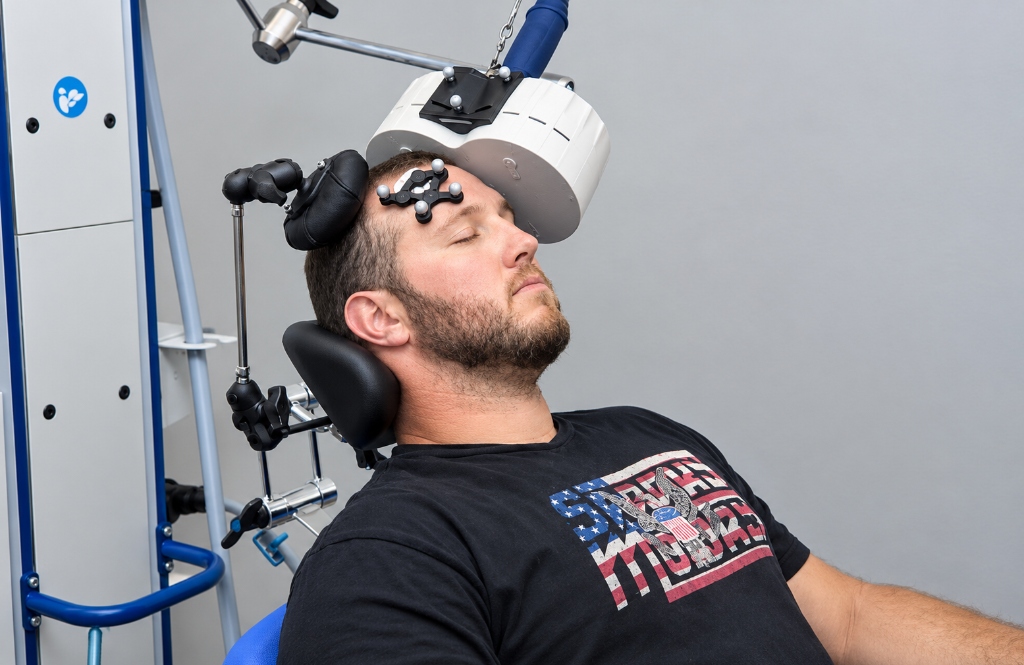
Does TMS Therapy Work for Bipolar Disorder? Quick Clinical Answer
Yes, TMS therapy works effectively for bipolar disorder, specifically for relieving the debilitating depressive phase (bipolar depression). Peer-reviewed clinical trials and international registries confirm that between 50% and 60% of patients with bipolar depression achieve clinically meaningful symptom reduction with Transcranial Magnetic Stimulation, and approximately 30% to 45% achieve full clinical remission.
Unlike oral antidepressants (SSRIs/SNRIs) that circulate throughout the body and carry an elevated risk of triggering manic or hypomanic switching, TMS is a targeted, non-pharmacological neuromodulation therapy. When delivered alongside ongoing mood stabilizers under the direction of an experienced physician like Dr. Ritesh Amin, MD in Central New Jersey, the rate of treatment-emergent manic switching is remarkably low (less than 1.5%), making TMS one of the safest and most effective alternatives for treatment-resistant bipolar depression.
The Unique Clinical Challenge of Bipolar Depression
Bipolar disorder—encompassing Bipolar I, Bipolar II, and related spectrum conditions—is defined by alternating shifts in mood, energy, and executive function. While public awareness often highlights manic or hypomanic states, individuals with bipolar disorder spend up to three times more time in the depressive phase than in manic episodes.
Treating bipolar depression represents one of psychiatry's most delicate challenges:
- The Antidepressant Paradox: Prescribing standard antidepressants often backfires. By systemically flooding neurotransmitter pathways, these drugs can induce rapid cycling, mixed affective states, or sudden "manic switches."
- Incomplete Mood Stabilizer Protection: Medications like lithium, valproate, and lamotrigine protect against mania, yet many patients remain trapped in chronic, residual depression despite therapeutic blood levels.
- Intolerable Atypical Antipsychotic Side Effects: While drugs like quetiapine or lurasidone are approved for bipolar depression, they frequently cause sedation, metabolic syndrome, and significant weight gain that limit patient tolerance.
Because of these pharmacological trade-offs, targeted non-drug neuromodulation like TMS for bipolar depression offers a safer path to recovery.
How TMS Therapy Works in the Bipolar Brain
Transcranial Magnetic Stimulation uses focused magnetic pulses—similar in strength to an MRI scan—to directly stimulate underactive neural circuits responsible for emotional regulation:
In bipolar depression, functional neuroimaging shows marked hypoactivity in the left dorsolateral prefrontal cortex (dlPFC) coupled with dysregulated firing in the limbic system. As detailed on authoritative resources including Wikipedia's overview of Transcranial Magnetic Stimulation and clinical research on bipolar disorder:
- Prefrontal Re-Activation: Applying high-frequency (10 Hz) or intermittent theta-burst stimulation (iTBS) to the left dlPFC stimulates dormant neurons, restoring balanced cortical firing.
- Calming Limbic Hyperactivity: Strengthening prefrontal regulatory pathways dampens overactive emotional circuits in the amygdala, reducing persistent despair and guilt.
- Promoting Neuroplasticity: Magnetic pulses trigger the sustained release of Brain-Derived Neurotrophic Factor (BDNF), repairing damaged synaptic connections without systemic medication toxicity.
- Addressing Comorbid Anxiety: When severe agitation or insomnia co-occurs, clinicians can deliver low-frequency (1 Hz) inhibitory pulses to the right dlPFC to quiet hyperarousal, as detailed in our guide on TMS therapy for anxiety.
Clinical Evidence: What Studies Show About TMS Efficacy
Over the past decade, multiple randomized controlled trials and meta-analyses have substantiated TMS as an effective, evidence-based therapy for bipolar depression:
- 50% to 60% Response Rates: Large clinical registries indicate that over half of bipolar depression patients achieve a 50% or greater reduction on standardized depression rating scales (MADRS and HAM-D).
- High Remission Potential: Roughly one in three patients achieves complete clinical remission, returning to their functional baseline.
- Effective for Bipolar I and Bipolar II: Research demonstrates that patients with Bipolar II (recurrent major depression with hypomania) and Bipolar I (history of mania) experience comparable depressive relief from rTMS protocols.
- Durable Mood Recovery: Most responders maintain their improvements for 6 to 12 months post-treatment. Periodic maintenance booster sessions can quickly re-establish stability if life stressors emerge.
Review additional benchmarks in our guide on what causes treatment-resistant depression.
Safety Profile: Can TMS Trigger Mania or Hypomania?
The primary safety concern with bipolar neuromodulation is whether magnetic stimulation can trigger an affective switch into mania or hypomania.
Psychiatric literature confirms that the risk of Treatment-Emergent Affective Switch (TEAS) with TMS is exceptionally low:
- Under 1.5% Switch Rate: Meta-analyses evaluating hundreds of bipolar TMS patients report manic switch rates between 0.8% and 1.4%. This is comparable to sham/placebo stimulation and significantly safer than oral antidepressants (10% to 15% switch risk).
- Mandatory Mood Stabilizer Foundation: Patients receiving bipolar TMS must maintain their baseline mood-stabilizing medication (such as lithium or lamotrigine). These medications provide a biochemical floor that prevents manic elevation while TMS lifts depression.
- Continuous Clinical Monitoring: At each visit, clinicians screen for early signs of hypomania (decreased sleep need, rapid speech, heightened agitation), allowing prompt protocol adjustments.
For safety data across psychiatric conditions, explore our guide on is TMS therapy safe for the brain.
Comparing Bipolar Depression Treatments
Comparing TMS to standard pharmacological and electroconvulsive treatments illustrates why neuromodulation has become an essential clinical tool:
Who Is a Good Candidate for Bipolar TMS Therapy?
TMS is well suited for patients who meet the following clinical indications:
Medication-Resistant Lows
You experience severe depressive episodes that have not responded adequately to standard mood stabilizers or bipolar-approved therapies.
Intolerable Drug Side Effects
Oral medications caused distressing side effects such as metabolic issues, sedation, cognitive dulling, or severe weight gain.
Stable Medication Floor
You take and plan to maintain a baseline mood stabilizer to ensure safe stimulation without manic switching.
Desire to Avoid ECT
You prefer an outpatient medical procedure with zero anesthesia, zero cognitive disruption, and zero downtime.
Learn more in our guide on who is a good candidate for TMS therapy and explore ketamine therapy for mood disorders.
What to Expect During a Bipolar TMS Treatment Course
At our Edison and Kendall Park, NJ clinics, a TMS course is structured for comfort, safety, and measurable outcomes:
- Initial Cortical Mapping: Dr. Amin determines your motor threshold and pinpoints target coordinates using computerized coil mapping.
- Daily Outpatient Sessions: Treatments occur 5 days per week over 6 weeks (30 to 36 total sessions). Each session lasts 19 to 30 minutes while you relax in an ergonomic recliner.
- Zero Downtime: You remain awake and alert throughout. Immediately after, you can drive yourself back to work or routine activities.
- Continuous Affective Monitoring: Weekly clinical rating scales track depressive improvement and safeguard against hypomanic activation.
FDA Status and Insurance Coverage Considerations
Understanding regulatory status and insurance options helps patients plan their care effectively:
- Regulatory Standing: While TMS was first cleared by the FDA for unipolar depression, major psychiatric associations and international neuromodulation societies endorse rTMS for bipolar depression as an evidence-based therapy. Advanced systems like Deep TMS also hold clearances covering depression with comorbid features.
- Insurance Authorizations: Commercial insurers, Medicare, and NJ Medicaid frequently approve coverage when bipolar patients demonstrate treatment-resistant depression that has failed multiple medication trials. Our clinic manages the complete prior authorization process.
Review our guide on how much TMS costs with insurance and check our accepted insurance plans.
When to Consult a Specialist for Bipolar Mood Support
Consider scheduling a specialized psychiatric consultation if:
- Depressive episodes persist for months despite faithful adherence to mood stabilizers.
- Antidepressants have repeatedly induced irritability, sleeplessness, or rapid cycling.
- Atypical antipsychotics have caused unacceptable metabolic, endocrine, or weight side effects.
- You experience overwhelming morning fatigue, psychomotor slowing, or anhedonia that prevents you from working.
- You want a physician-directed treatment plan that treats root brain circuitry rather than masking symptoms with more daily pills.
Explore our dedicated clinical service page on TMS therapy for bipolar depression in Edison, NJ and our statewide New Jersey Bipolar TMS treatment center.
Conclusion: A Proven Path to Mood Stability
Living with bipolar depression often feels like being caught in an unyielding battle between crushing lows and the constant anxiety that treatment might trigger a manic high. When oral medications prove ineffective or produce debilitating physical side effects, you do not have to accept persistent depression as your unavoidable reality.
Transcranial Magnetic Stimulation (TMS) represents a scientifically substantiated breakthrough that safely targets underactive emotional circuits without circulating chemicals through your bloodstream. With clinical response rates between 50% and 60% and a switch risk under 1.5% when maintained alongside mood stabilizers, TMS offers a transformative option for long-term affective recovery.
If you or a loved one in Central New Jersey are seeking expert, compassionate care for bipolar depression, contact Dr. Ritesh Amin, MD today to schedule your comprehensive consultation.
FAQ: TMS Therapy for Bipolar Disorder
Yes. Clinical trials and meta-analyses show that between 50% and 60% of patients with bipolar depression achieve clinically significant symptom reduction with TMS therapy, and 30% to 45% achieve full remission. It is especially beneficial for patients who have not responded to standard mood stabilizers or atypical antipsychotics.
When administered properly by a qualified psychiatrist and combined with ongoing mood-stabilizing medication, the risk of a manic or hypomanic switch during TMS is less than 1.5%. This is significantly lower than the switch risk associated with oral antidepressant medications (10% to 15%).
Yes. Staying on your prescribed mood-stabilizing medication (such as lithium, lamotrigine, or an atypical antipsychotic) is an essential safety requirement. Mood stabilizers provide a biological protective floor that prevents mood overshooting into mania while TMS lifts depression.
Yes. Clinical research confirms that patients with Bipolar I (history of full mania) and Bipolar II (history of hypomania and severe recurrent depression) experience comparable, substantial depressive symptom relief from rTMS protocols.
Oral antidepressants circulate throughout the entire body and flood systemic neurochemistry, which frequently induces rapid cycling or manic switches. TMS is a non-systemic, localized physical treatment that stimulates underactive cortical circuits directly without whole-body medication side effects or high switch risks.
Most patients begin noticing improvements in physical energy, motivation, and sleep quality around weeks 2 to 3 of daily treatment. Significant lifting of mood and emotional clarity typically solidifies between weeks 4 and 6 of the protocol.
Many commercial insurance plans, Medicare, and NJ Medicaid provide coverage for TMS when a patient has treatment-resistant depression that has failed prior medication trials. Our clinic handles the prior authorization process and explores all coverage options on your behalf.
While Electroconvulsive Therapy (ECT) induces generalized seizures under general anesthesia and often causes significant retrograde memory loss and confusion, TMS requires no anesthesia, induces no seizures, produces no memory loss, and allows patients to resume normal activities immediately.
Have questions about TMS therapy for bipolar disorder in Central New Jersey? Schedule a consultation with Dr. Ritesh Amin →